What Is AI? A Simple Explanation for Beginners and Students
Introduction
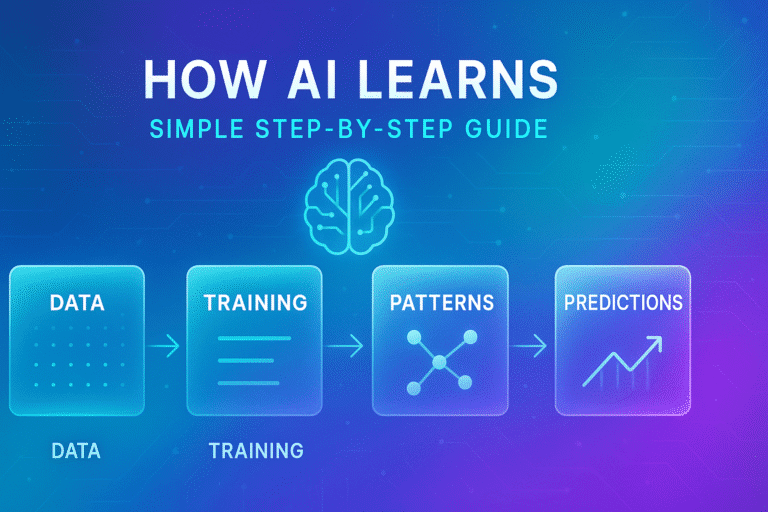
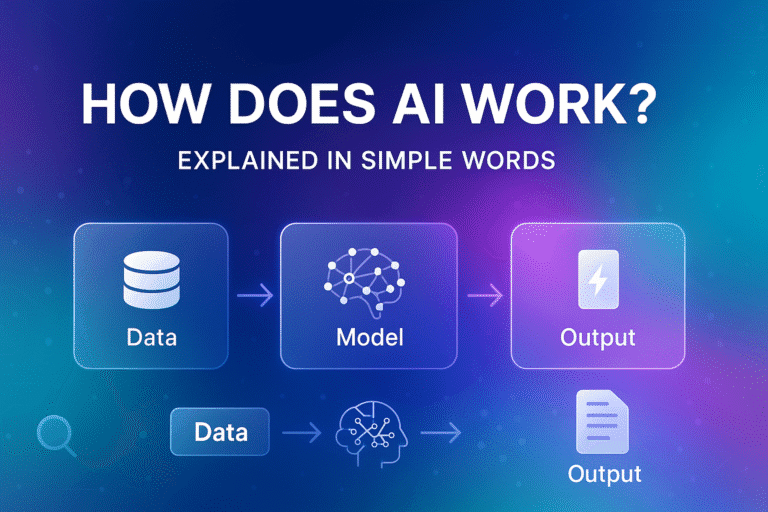
Artificial Intelligence, or AI, is a field of technology that allows computers and machines to learn, think, and solve problems in a way that feels similar to humans. But unlike humans, AI does not have feelings, opinions, or real understanding. It learns by processing large amounts of information and recognizing patterns.
In this lesson, we will explain AI in simple words, give examples you see in daily life, and help you understand why learning AI today is important for students and beginners.
What Is AI?
AI is technology that helps computers:
- Learn from data
- Understand information
- Make predictions
- Solve problems
- Give useful responses
Think of AI as a tool that improves the more it practices — similar to how a student becomes better after studying many examples.
Simple Example
If a computer studies thousands of photos of cats and dogs, it learns how to tell the difference.
It doesn’t “know” what a cat is like humans do — it just recognizes patterns.
AI vs Normal Computer
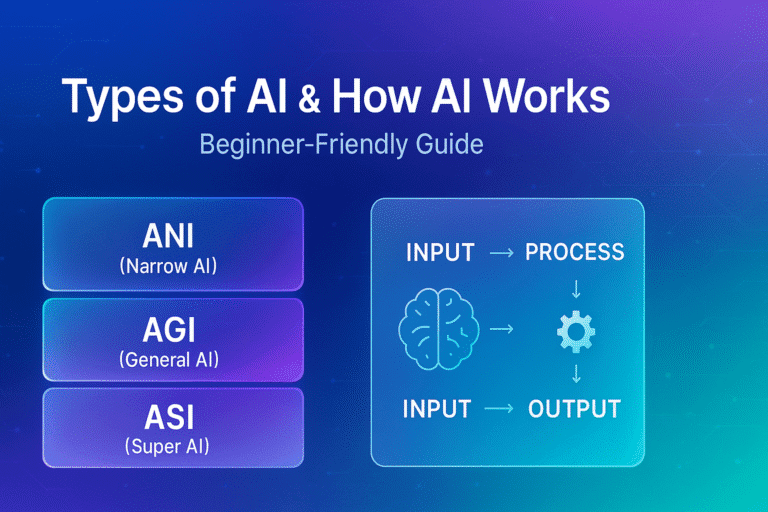
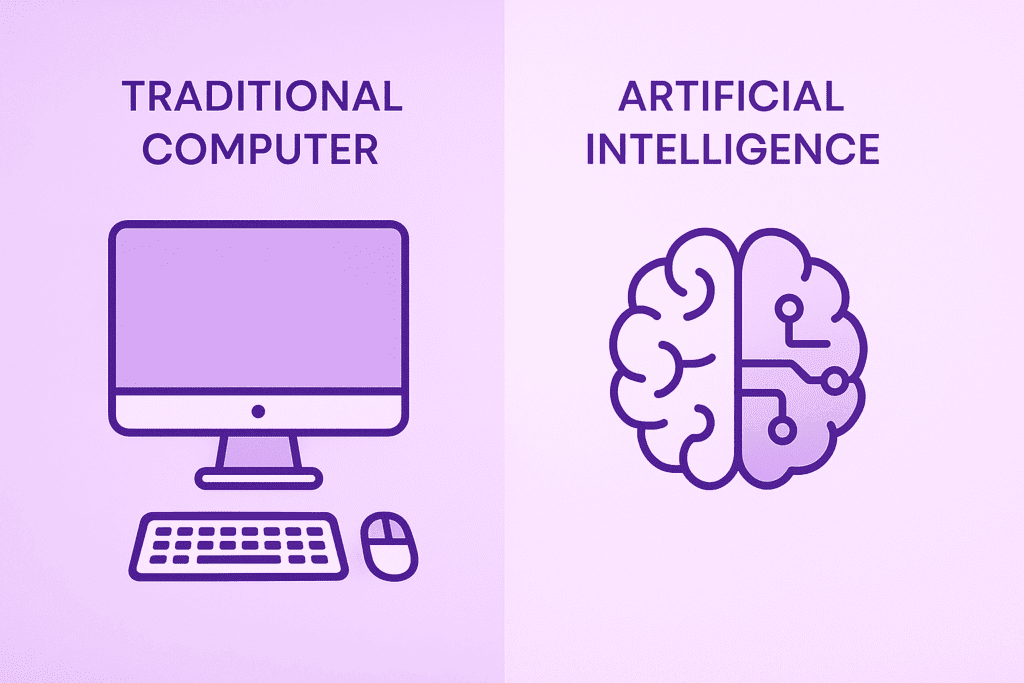
A normal computer follows fixed instructions.
Example:
Calculator = you enter numbers → it gives exact result.
AI tries to understand your request and give the best possible answer based on learning.
Example:
Ask AI — “Explain photosynthesis in simple words” → It writes an explanation for you.
Where Do You See AI Everyday?
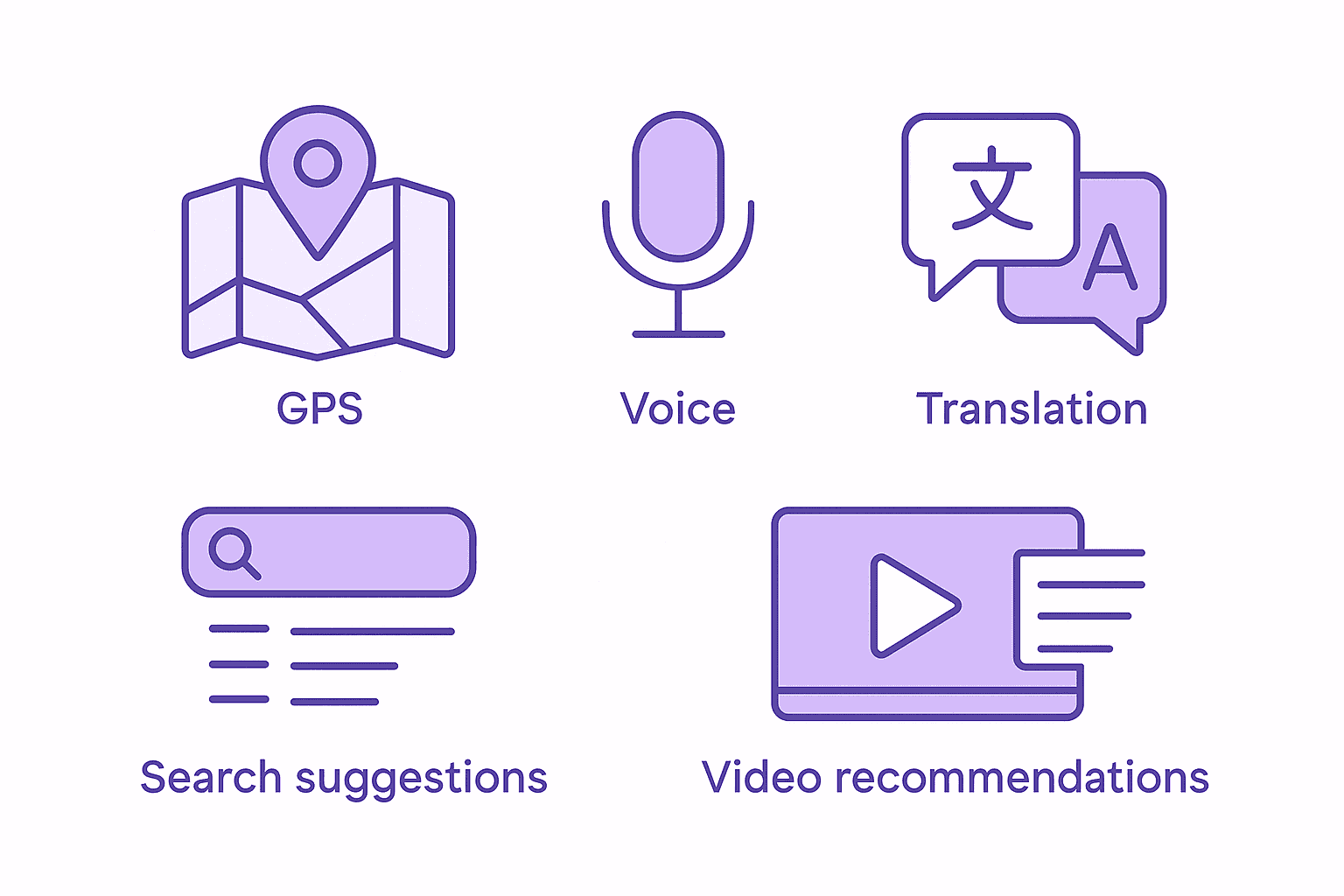
AI is already part of daily life:
- YouTube & TikTok recommendations
- Google search suggestions
- Spell-check and grammar tools
- Maps and travel directions
- Voice assistants like Siri & Google Assistant
- Chatbots like ChatGPT and Gemini
If you use a smartphone, you are already using AI.
Why Is AI Important for Students and Beginners?
AI can help with:
- Understanding school topics faster
- Making notes and summaries
- Learning languages
- Improving writing and grammar
- Research and study planning
- Creative projects like videos and presentations
Learning AI early builds skills that will be valuable in the future.
Can AI Think Like Humans?
No.
AI does not think, feel, or understand like humans.
It uses patterns and data to generate answers — not emotions or experience.
Can AI Be Wrong?
Yes. AI can:
- Give incorrect answers
- Miss important details
- Misunderstand confusing questions
Always double-check important information, especially for school assignments.
Do You Need Coding to Use AI?
Not at the beginning.
Most AI tools are made for normal users.
Coding becomes useful when you want to build AI systems — but you can learn AI without writing a single line of code at first.
Is AI Safe?
AI is safe when used responsibly.
Safe use means:
- Don’t share personal information
- Don’t copy school work blindly
- Don’t rely on AI for everything
- Use AI as a helper, not a replacement
Beginner Practice Exercise
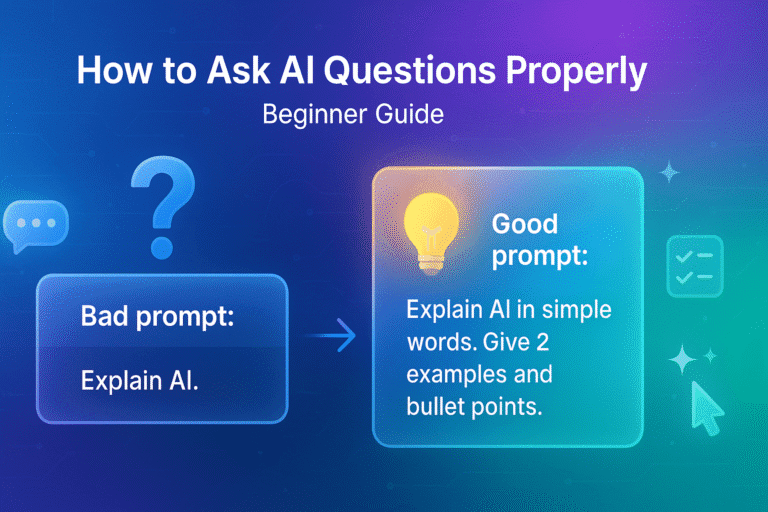
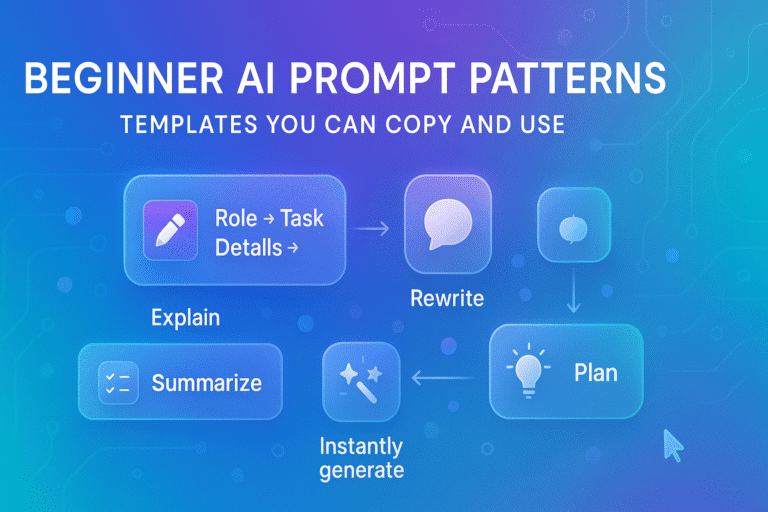
Open any AI tool like ChatGPT or Gemini and ask:
Explain gravity in simple words.
Make 5 bullet notes on the solar system.
Create a study plan for math exam in 1 week.
Adjust your prompts if the answer is not clear — this builds skill.
Key Points
- AI learns from examples and patterns
- AI does not think like humans
- Anyone can learn AI step-by-step
- AI helps with studying, writing, and projects
- Practice improves your results
📌 Summary
In this lesson, you learned what artificial intelligence is and how it works in simple terms. AI is technology that learns from information and uses patterns to answer questions, recognize things, and solve problems. It does not think like humans, but it helps us study faster, work smarter, and complete tasks more easily. Anyone can begin learning AI, and small daily practice builds real skill.
Student Practice
Try asking any AI tool the following:
- Explain gravity like I am 10 years old
- Give 5 examples of AI used in daily life
- Create a one-week study plan for exams
Review the answers and try re-prompting to get better results.
This is how you start learning AI step-by-step.