Types of AI & How AI Works (Beginner-Friendly Guide)
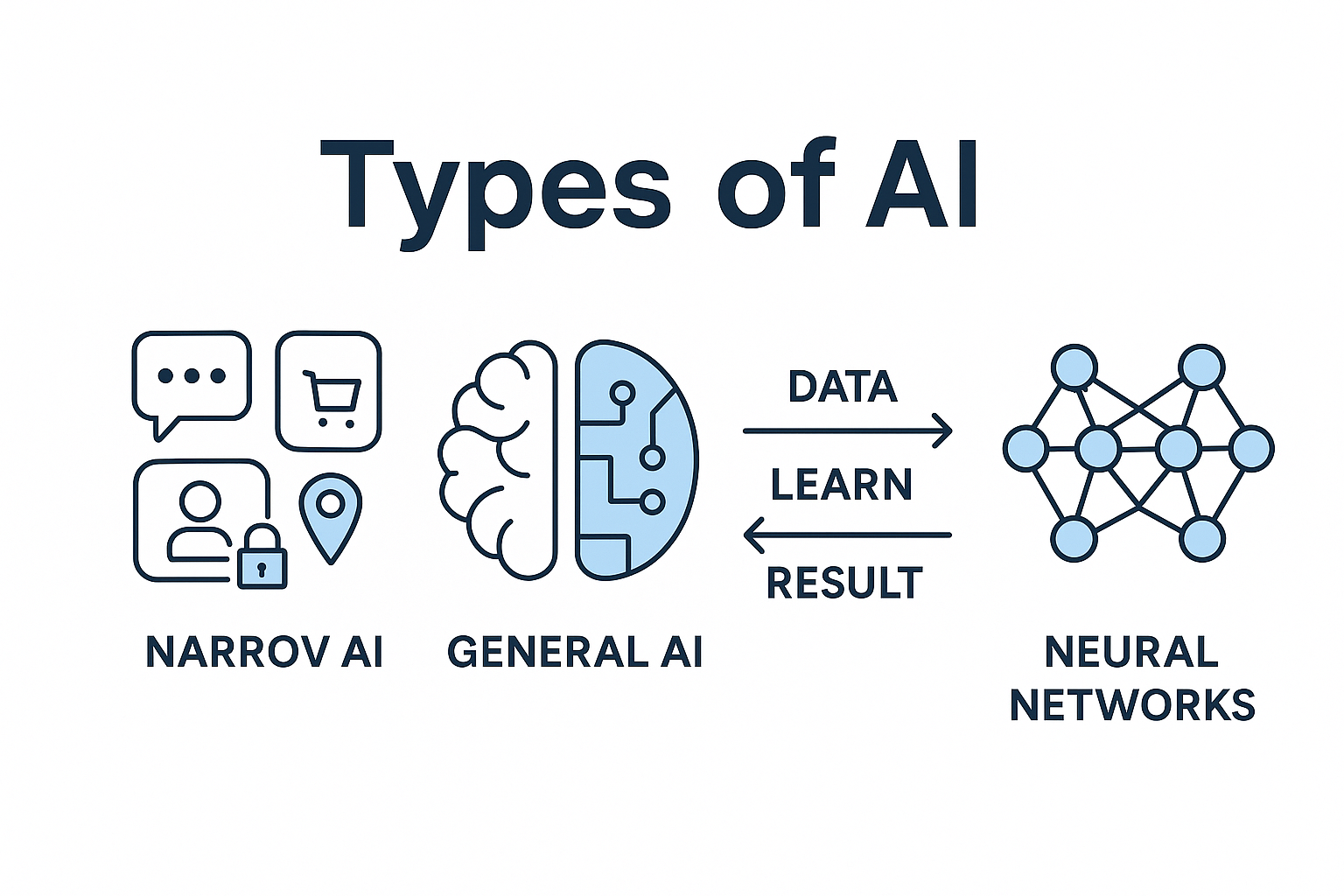
Artificial Intelligence (AI) can feel confusing at first. There are many terms — machine learning, neural networks, deep learning — and most beginners think they all mean the same thing.
This guide explains AI in the simplest way possible, while still being accurate and SEO-strong. By the end, you will understand:
• What AI really means
• Main types of AI
• How AI learns
• Where you see AI every day
• Basic AI terms (explained simply)
This is part of the AI Basics Series, so if you’re learning AI step-by-step, start here.
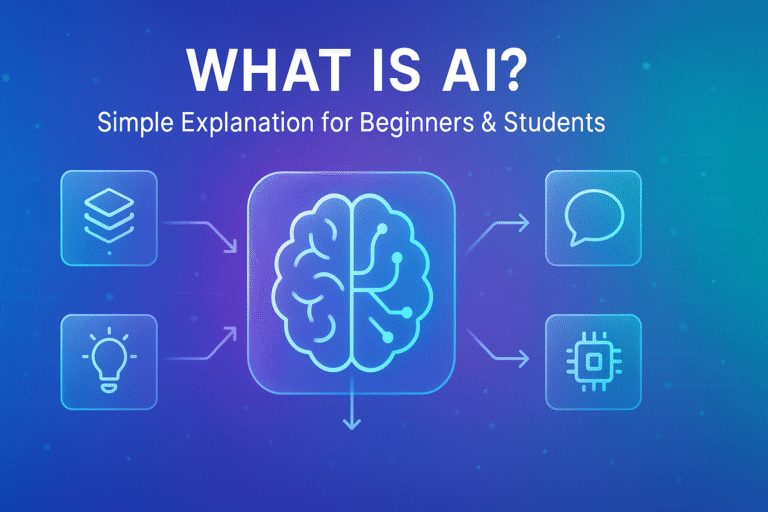
What Is AI? (Simple Definition)
AI means teaching computers to think and learn in a human-like way so they can:
• understand language
• recognize images and speech
• make decisions
• solve problems
• generate content
AI does not “think like a human,” but it imitates human thinking using math, logic, and large amounts of data.
Two Main Types of AI
Narrow AI (Most AI Today)
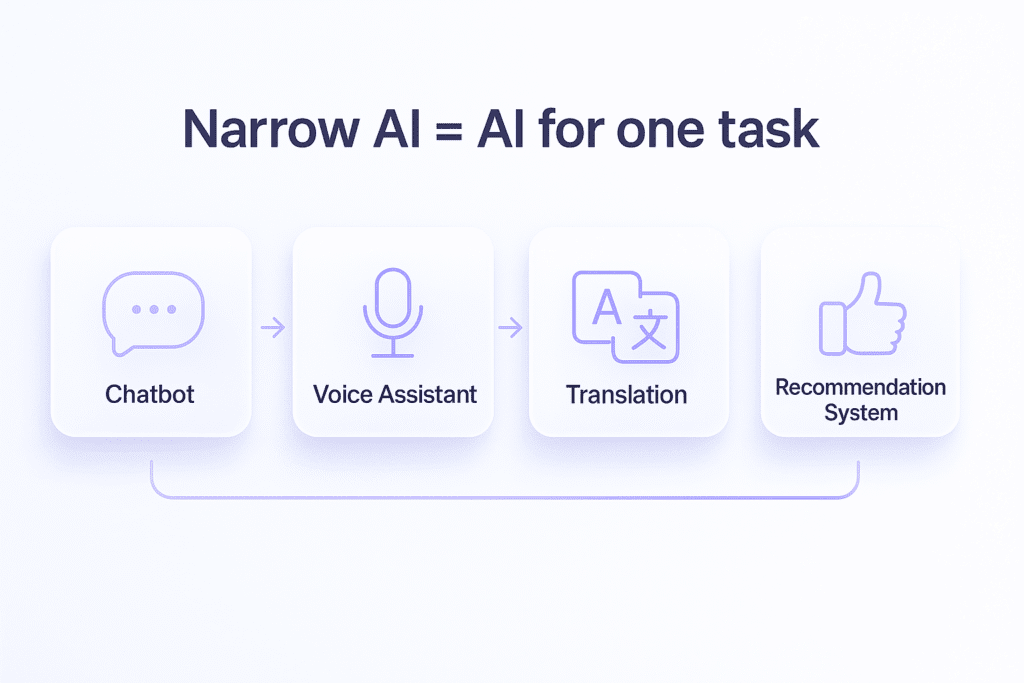
Narrow AI = built to do one specific task.
Examples:
• Chatbots (ChatGPT)
• Voice assistants
• Translation apps
• TikTok/YouTube recommendations
• Face unlock on your phone
It can’t do everything — it is trained for one job at a time.
General AI (Future AI)
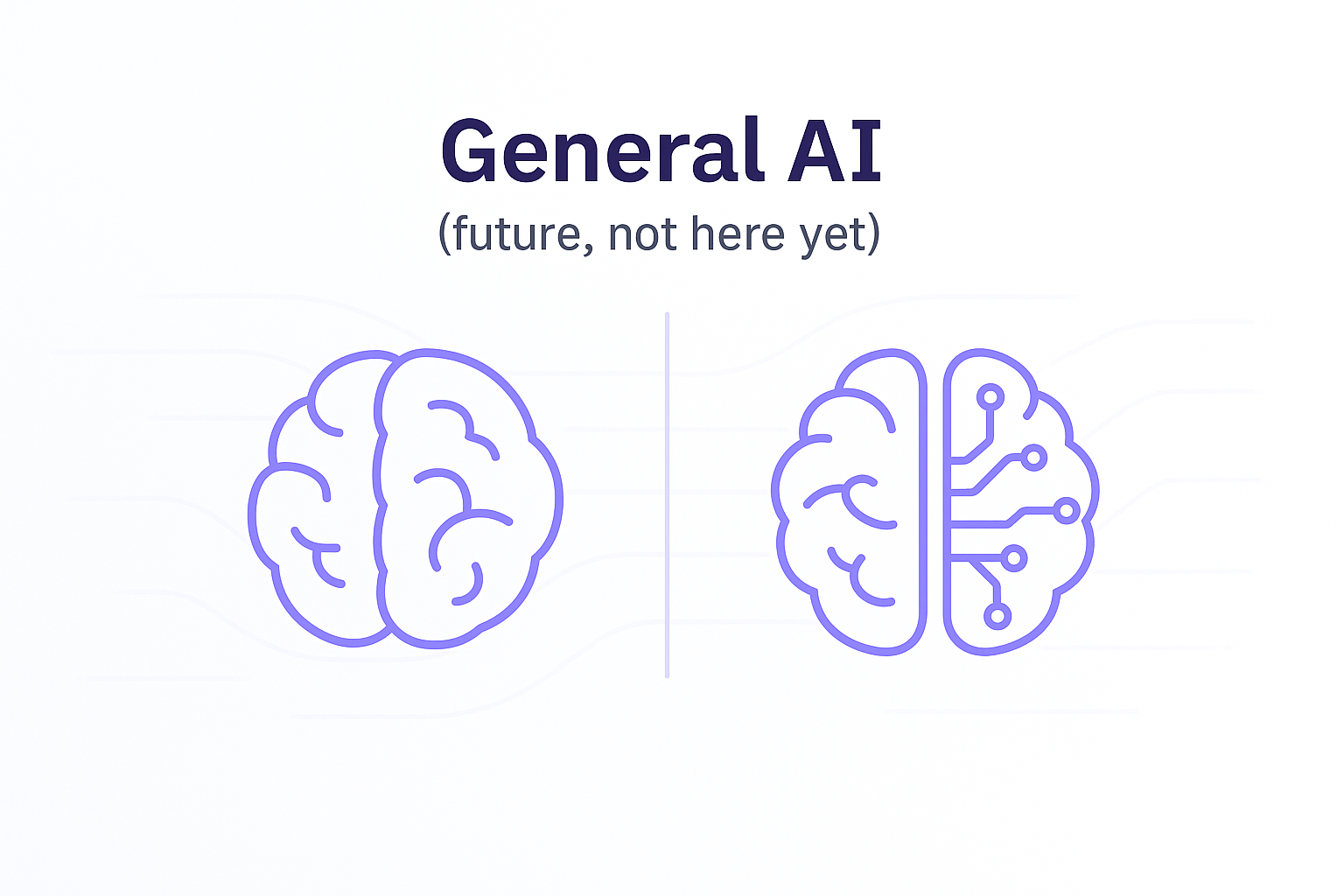
General AI = human-level intelligence.
• Can learn any skill
• Can reason across different tasks
• Not invented yet
• Still in research stage
Think of General AI as long-term future tech — not today’s technology.
Comparison Table: Narrow AI vs General AI
| Feature | Narrow AI | General AI |
|---|---|---|
| Task type | One specific task | Any task like a human |
| Exists today? | Yes | No |
| Examples | ChatGPT, Siri, Maps | Future hypothetical AI |
| Learning style | Focused | Broad, adaptive |
How AI Learns: Machine Learning Basics
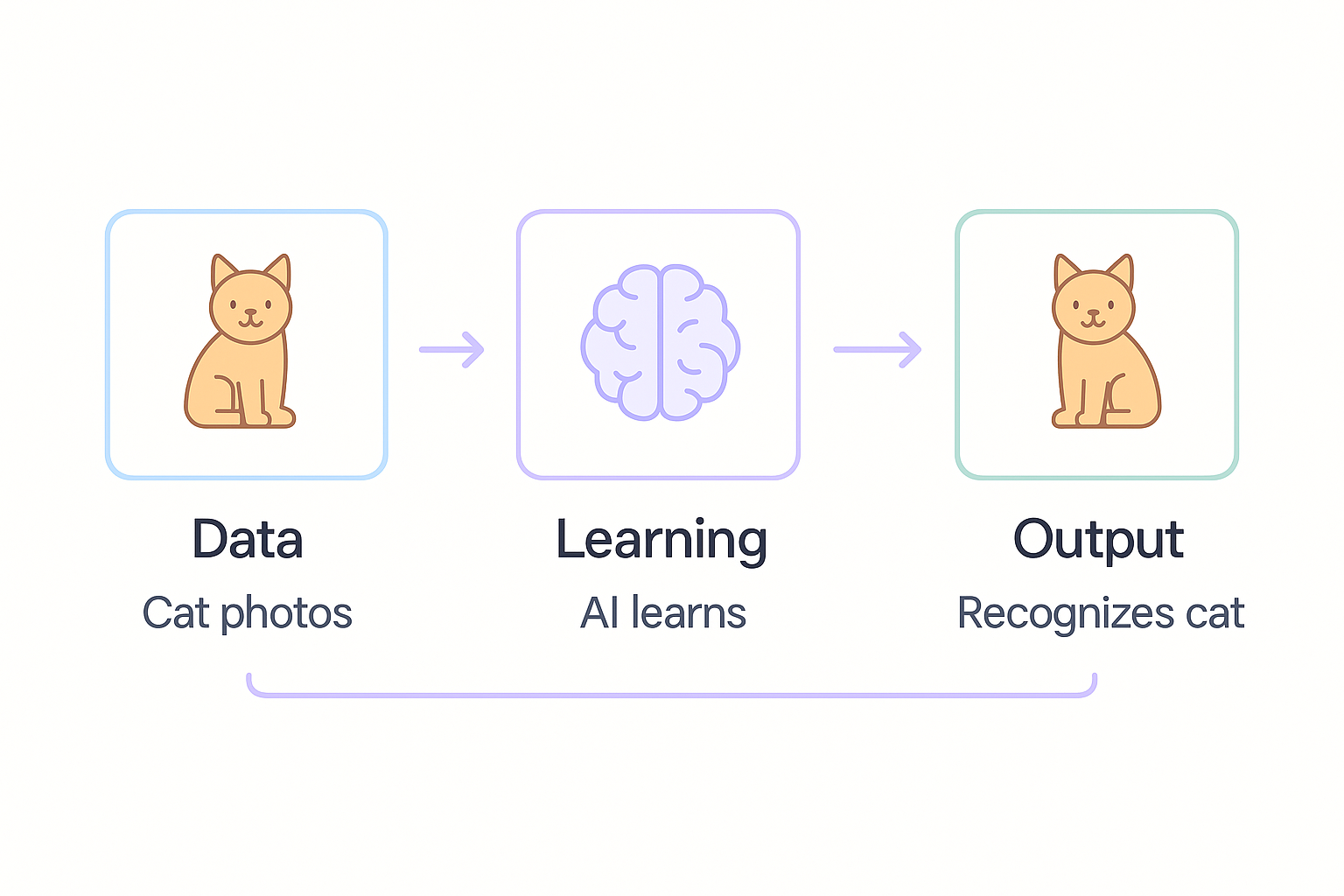
Machine Learning (ML) = AI learns from data instead of being programmed manually.
Simple idea
Show the computer many examples → it learns patterns → it makes predictions.
Example
Show thousands of cat images → AI learns what a cat looks like.
Used in
• email spam filters
• bank fraud detection
• online recommendations
Deep Learning (Advanced Machine Learning)
Deep Learning = advanced machine learning using neural networks.
Neural networks are layers of tiny processing “nodes” that copy how the brain works.
Used in
• Self-driving car vision
• Voice recognition (Siri, Alexa)
• Face recognition
• Image and video generation
Comparison Table: Machine Learning vs Deep Learning
| Feature | Machine Learning | Deep Learning |
|---|---|---|
| Learning method | Learns patterns from data | Learns deeply through layers |
| Requires big data? | Not always | Yes, massive data |
| Example | Spam detection | Self-driving cars, vision models |
Neural Networks (Explained Simply)
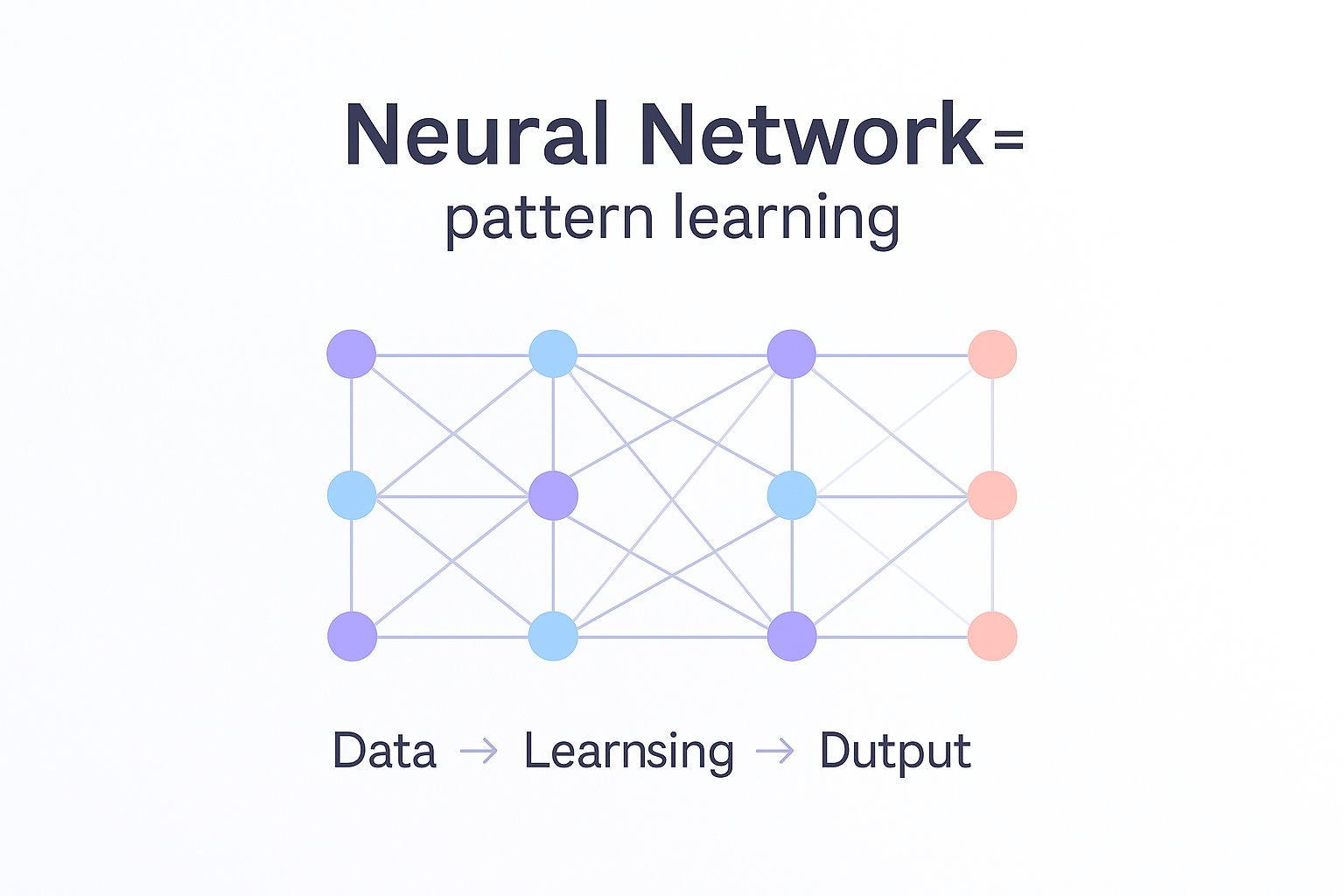
Neural networks are digital “brain-like” systems made of connected points (nodes) that process information.
They learn by adjusting connections between nodes based on new data.
Simple idea
The more examples → the stronger the learning → the better the predictions.
Natural Language Processing (NLP)
NLP helps computers understand and respond to human language.
Where you see NLP
• ChatGPT
• Google Search suggestions
• Email autocomplete
• Translation apps
When you type a question into Google or ChatGPT and get a relevant answer — that is NLP working.
Generative AI (The AI That Creates)
Generative AI can create new content such as:
• text
• images
• audio
• video
• code
Examples
• ChatGPT (text)
• Midjourney / DALL-E (images)
• Synthesia (video)
• Suno / ElevenLabs (audio)
Where You Already See AI Every Day
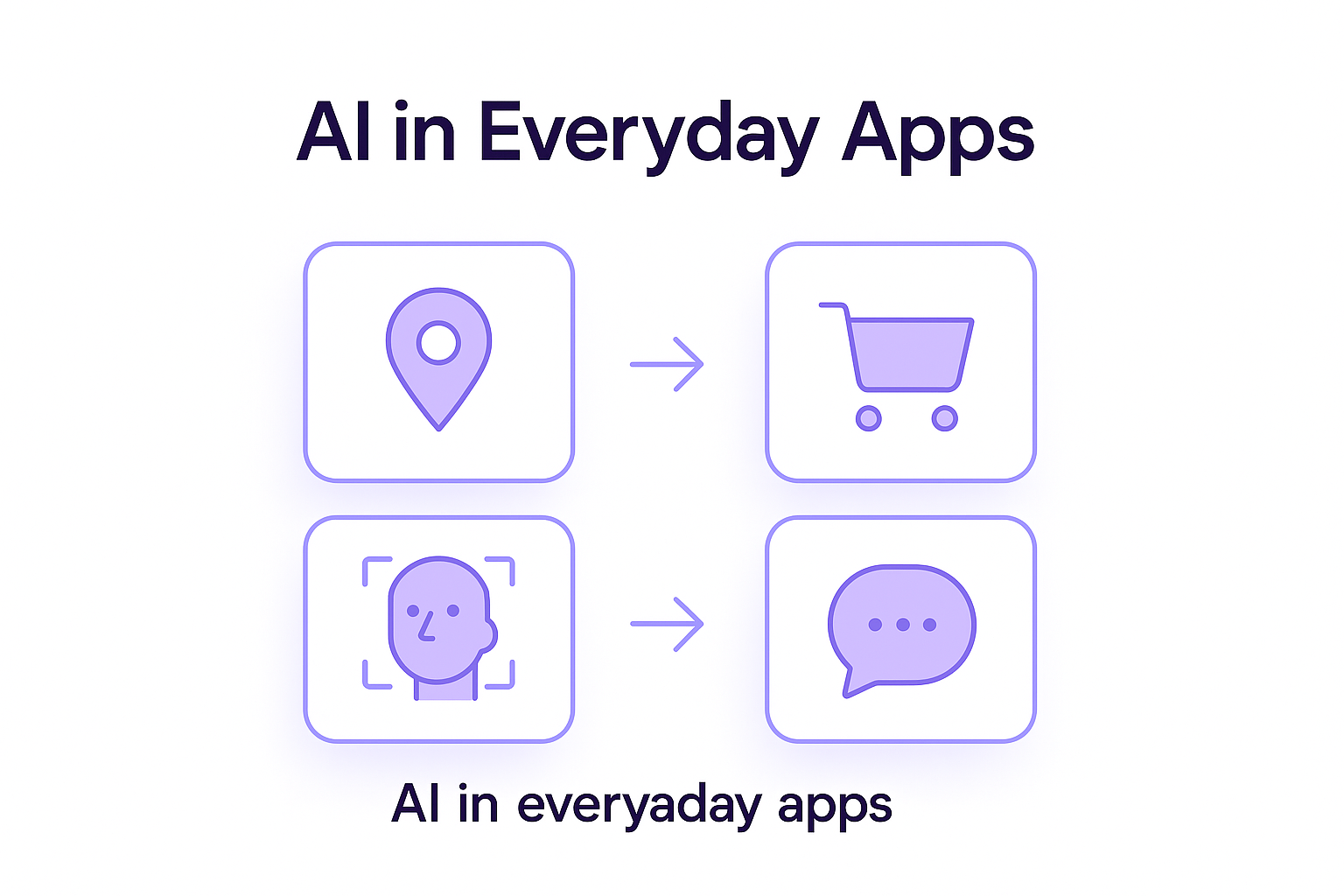
You use AI constantly, even without noticing.
Common examples
• Google Search
• Smart replies in email
• TikTok / Reels / YouTube suggestions
• Maps traffic prediction
• Face unlock
• Spell check
• Shopping recommendations
AI is already part of daily life — this guide helps you understand how it works.
Key AI Terms
• AI = machines doing tasks that need thinking
• Machine learning = AI learning from data
• Deep learning = layered neural learning
• Neural network = brain-inspired computing system
• NLP = language understanding
• Generative AI = AI that creates content
Why AI Needs a Lot of Data
AI improves through data exposure.
• more examples = better learning
• poor data = incorrect results
• high-quality data = accurate AI
AI learns the same way humans do — through repetition and correction.
Summary
If you remember only this:
• Most AI today = Narrow AI
• Machine Learning teaches AI using data
• Deep Learning uses neural networks
• NLP helps AI understand language
• Generative AI creates content
You now understand AI better than most beginners.
FAQ
What are the 2 main types of AI?
Narrow AI (today) and General AI (future).
Is ChatGPT General AI?
No. ChatGPT is Narrow AI trained for language tasks.
What is machine learning?
A way for AI to learn from data instead of being manually programmed.
What is deep learning?
A type of machine learning using neural networks with many layers.
Does AI think like humans?
No. AI imitates patterns but does not understand like humans.